+1(877) 887-3773
Agency leaders do not need another “silver bullet.” They need a practical option that officers can carry, deploy, and consistently justify when a situation is moving toward force.
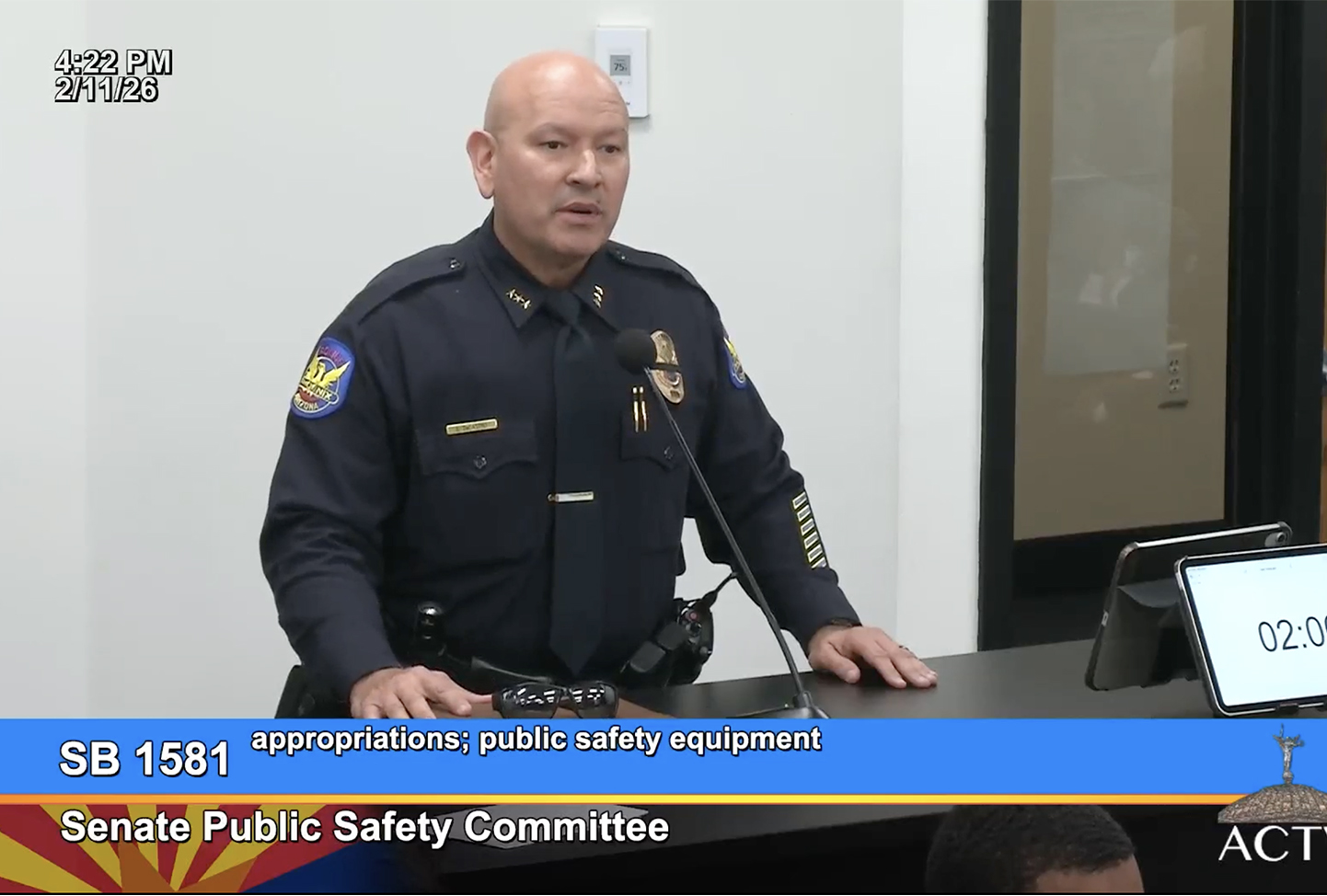
In a new video, PepperBall CEO Bob Plaschke introduces retired Mesa, Arizona Assistant Chief Ed Wessing who discusses how Mesa adopted PepperBall and built a day-to-day patrol program around it. Wessing spent 30 years serving the public in Mesa and approaches the topic the way experienced leaders do: adoption is not a purchase order; it is a program.
The conversation focuses on the real steps behind implementation. How do you evaluate a non-lethal option in a way that is practical and disciplined? How do you build policy that is clear enough for patrol use and strong enough to stand up to review? How do you train so the tool is available when it matters, without creating unnecessary risk or confusion in the field? And how do you establish the expectations, oversight, and consistency that make the entire program sustainable?
Wessing also speaks from the broader perspective of program-building inside a modern department, supporting officers, improving response to mental-health-related calls, and reinforcing transparency in review practices. Those themes are not separate from a non-lethal program; they are part of what makes it credible. When leadership sets the standard, trains to it, and holds the line on accountability, officers are better equipped to make sound decisions under pressure.
If your agency is evaluating options between verbal direction and higher levels of force, this video offers a straightforward look at what it takes to move from interest to evaluation and from evaluation to daily operational use.
Watch the video here: https://youtu.be/oYBvQ7hDmaw